
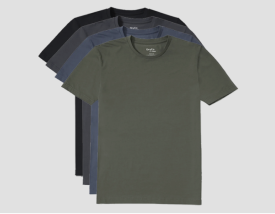


A minimalist capsule wardrobe should make getting dressed simple. You reach in, grab a shirt, and it works. No second guessing. No outfit panic.
Most closets are packed, but a lot of those shirts are unreliable. They wrinkle fast. They fit weird. They only work in one setting. Or they look fine until sweat shows up.
This system fixes that with five minimalist shirts that cover most of real life: workdays, weekends, dinners, travel, and last-minute plans. Each piece is neutral, easy to repeat, and easy to mix.
One rule makes the whole thing work: start with a base layer. When your undershirt manages sweat, your outer shirts stay cleaner, sharper, and wearable longer.
The Rules That Make a 5-Shirt Capsule Work
A 5-shirt capsule only works when every piece earns its place. These rules keep the wardrobe simple, flexible, and easy to repeat without looking boring. Follow them, and getting dressed stops feeling like a decision and starts feeling automatic.
1) Start with neutrals, then add personality
Neutrals make mixing effortless. Build your core with white, light blue, navy, gray, and soft earth tones (tan, olive, sand). Once those are covered, add one controlled pattern like a stripe or a subtle check.
If a shirt only matches one pair of pants, it’s not capsule-friendly.
2) Fit is what makes a shirt look “right”
A good fit does more than any logo or price tag. Use this quick check:
● shoulder seams sit at the edge of your shoulder
● chest feels comfortable without pulling
● sleeves don’t balloon
● torso falls clean (not baggy, not tight)
If the fit is wrong, the outfit looks off even if the shirt is expensive.
3) Only keep shirts you’ll actually wear often
A capsule wardrobe is built for repeat use. If a shirt can’t work for at least two different outfits and feel normal to wear twice a week, it becomes clutter.
The best capsule shirts are the ones you can wear to work, then wear again on the weekend with different pants and shoes.
Shirt 1: The Crisp White Button-Down

A white shirt is the anchor. It works with suits, chinos, denim, and dress pants. It also shows every weakness: thin fabric, sloppy collar, poor fit.
What to look for:
● fabric that isn’t see-through in indoor light
● a collar that holds shape open or with a tie
● clean stitching and stable placket
● sleeves that don’t balloon
If you fight underarm marks or chest transparency, a sweat proof undershirt helps keep the white shirt looking like a white shirt longer.
Shirt 2: The Light Blue Workhorse
Light blue sits in the sweet spot. It reads trustworthy, professional, and easy.
Best fabric choice for versatility:
● pinpoint oxford or a crisp poplin that can handle both suits and chinos
Simple outfit formulas:
● light blue + navy suit
● light blue + charcoal trousers
● light blue + beige chinos
● light blue + dark denim + blazer
Base layer tip: A moisture wicking undershirt can help on long days when heat and movement build up, especially under dress shirts.
Shirt 3: The Controlled Stripe
A capsule of all solids can feel flat. You don’t need loud prints to fix it. You need one pattern that behaves.
A bengal stripe (or a clean pencil stripe) does three things:
● adds dimension under a blazer
● looks sharper than a plain solid
● subtly elongates the torso
Best use:
● striped shirt under solid jackets
● striped shirt with chinos for polished casual
If you like your wardrobe quiet, this is the “interesting” shirt that still reads clean.
Shirt 4: The Rugged Casual Button-Up
You need one shirt that looks good when life is casual but you still want to look put together.
Pick one:
● Chambray: lighter, easier year-round, looks rugged without stiffness
● Flannel (subtle check): better for cool weather, works as an overshirt
Outfit formulas:
● chambray + dark denim + boots
● chambray + chinos + clean sneakers
● flannel overshirt + tee + black jeans
Shirt 5: The Heat Shirt
Hot days punish bad fabric. Linen wins because it breathes and doesn’t cling the same way.
Choose linen that:
● isn’t paper-thin
● isn’t overly scratchy
● holds shape enough to look intentional
Wear it with:
● chinos
● light trousers
● tailored shorts
● relaxed summer blazers
Wrinkles are part of the deal. The goal is “clean and relaxed,” not “pressed like a dress shirt.”
The Base Layer That Makes the System Work

A capsule wardrobe only works if the shirts stay wearable. Sweat, deodorant, and friction are what usually shorten a shirt’s life.
This is where a sweat proof undershirt earns its spot. It helps protect your outer shirt from sweat transfer and keeps you feeling more stable through the day.
A moisture wicking undershirt also plays a role. It focuses on pulling sweat off the skin and drying faster, which can make long wear more comfortable.
Think of it like insurance for your clean look.
Full Sleeve Undershirt: When It’s the Smart Choice
A full sleeve undershirt is not just for cold weather. It’s useful when:
● you want a smoother layer under a dress shirt
● you deal with forearm irritation from rough fabrics
● you’re traveling through temperature swings
● you want added coverage without adding bulk
The key is a sleeve that stays put and doesn’t bunch. If it fights your shirt, it ruins the point.
How This 5-Shirt Capsule Creates 20+ Outfits
The easiest way to get more outfits without buying more shirts is to keep your “bottom half” simple and repeatable. Start with a small set of staples that work with almost everything:
Your core bottoms and layers
● Navy trousers (or a navy suit)
● Charcoal trousers
● Beige chinos
● Dark denim
● A navy blazer
Now mix the five shirts through these pieces. Here are a few examples to show how it works:
Easy rotations
● White shirt + charcoal trousers
● White shirt + navy suit
● Light blue shirt + beige chinos
● Light blue shirt + dark denim + navy blazer
● Striped shirt + navy blazer + trousers
● Chambray shirt + dark denim
● Flannel overshirt + plain tee + jeans
● Linen shirt + chinos
● Linen shirt + tailored shorts
Once you have those base pieces, each shirt can create multiple looks just by changing the pants, shoes, or adding the blazer. You don’t need more shirts. You need fewer that work with everything.
Maintenance Rules That Keep Shirts Looking New
● Rotate your whites. Don’t wear the same one two days in a row.
● Wash promptly after heavy sweating. Collar stains set fast.
● Use cold water and avoid high heat drying when possible.
● Retire white shirts when the collar yellows. A dull white ruins the whole look.
● Tailor the easy wins: sleeve length, hem, waist.
Frequently Asked Questions
What is a 5-shirt capsule wardrobe?
It’s a small collection of versatile shirts designed to mix easily and cover most everyday situations without excess options.
How do minimalist shirts make outfits easier?
Minimalist shirts use neutral colors and clean designs, making them easier to repeat, layer, and pair with different pants and jackets.
Why is a base layer important in a capsule wardrobe?
A base layer helps manage sweat and oils, keeping outer shirts cleaner, sharper, and wearable for longer periods.
How many times should I be able to wear each shirt in a week?
Ideally, a capsule shirt should work in at least two different outfits and feel natural to wear multiple times without standing out.
What’s the biggest mistake people make when building a capsule wardrobe?
Buying pieces that only work in one setting. If a shirt can’t move between work, casual wear, and layering, it adds clutter instead of value.
Conclusion: Curation Over Volume
A five-shirt capsule works because it removes guesswork. Every piece mixes. Every shirt repeats. And you always have a clean option that looks intentional.
Build around minimalist shirts. Add a base layer that keeps sweat from showing up first. Choose necklines that work naturally with your outer shirts, and keep a full sleeve undershirt on hand for cooler seasons and travel.
Then stop thinking about your closet. Put the attention where it belongs: the day in front of you.
Control sweat. Simplify your closet. Shop Neat undershirts.


